DUSF Avionics
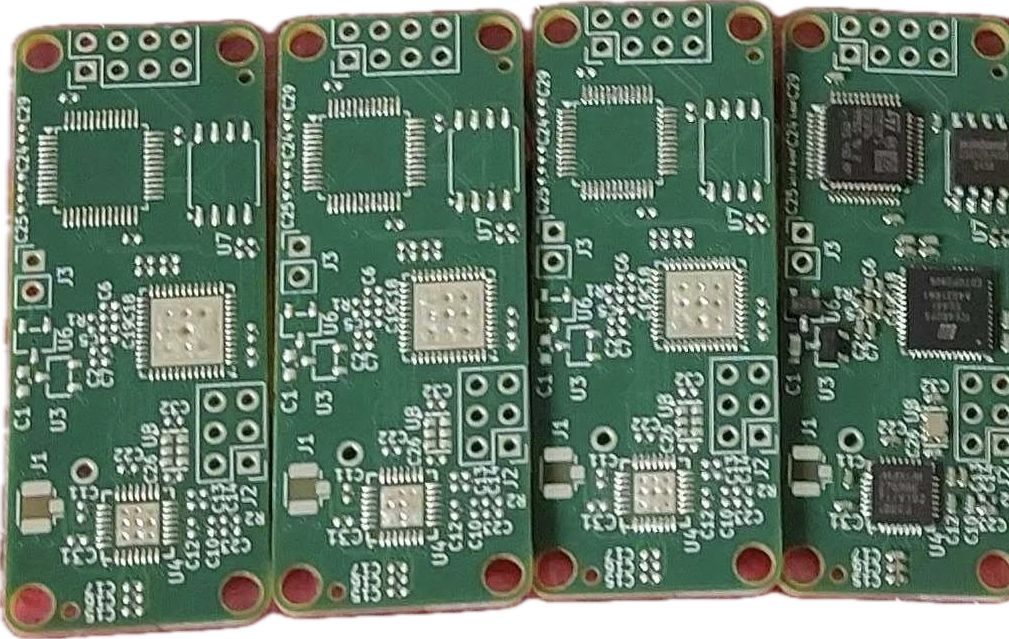
Mini flight tracker
An ultra-compact electronics board for locating and recovering rockets efficiently once landed, designed to perform on par with the big-name brands in both performance and size.
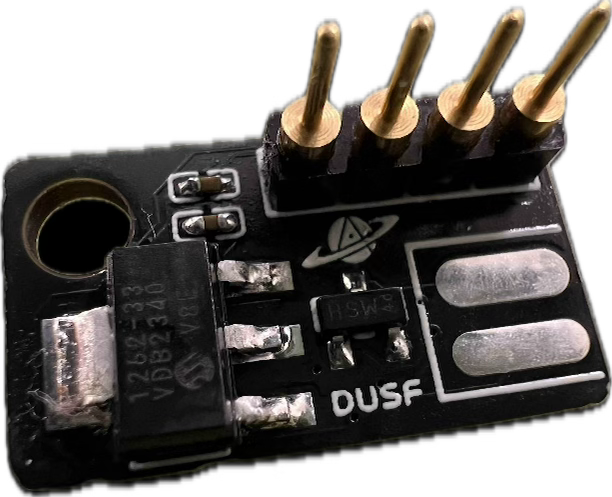
DUSC
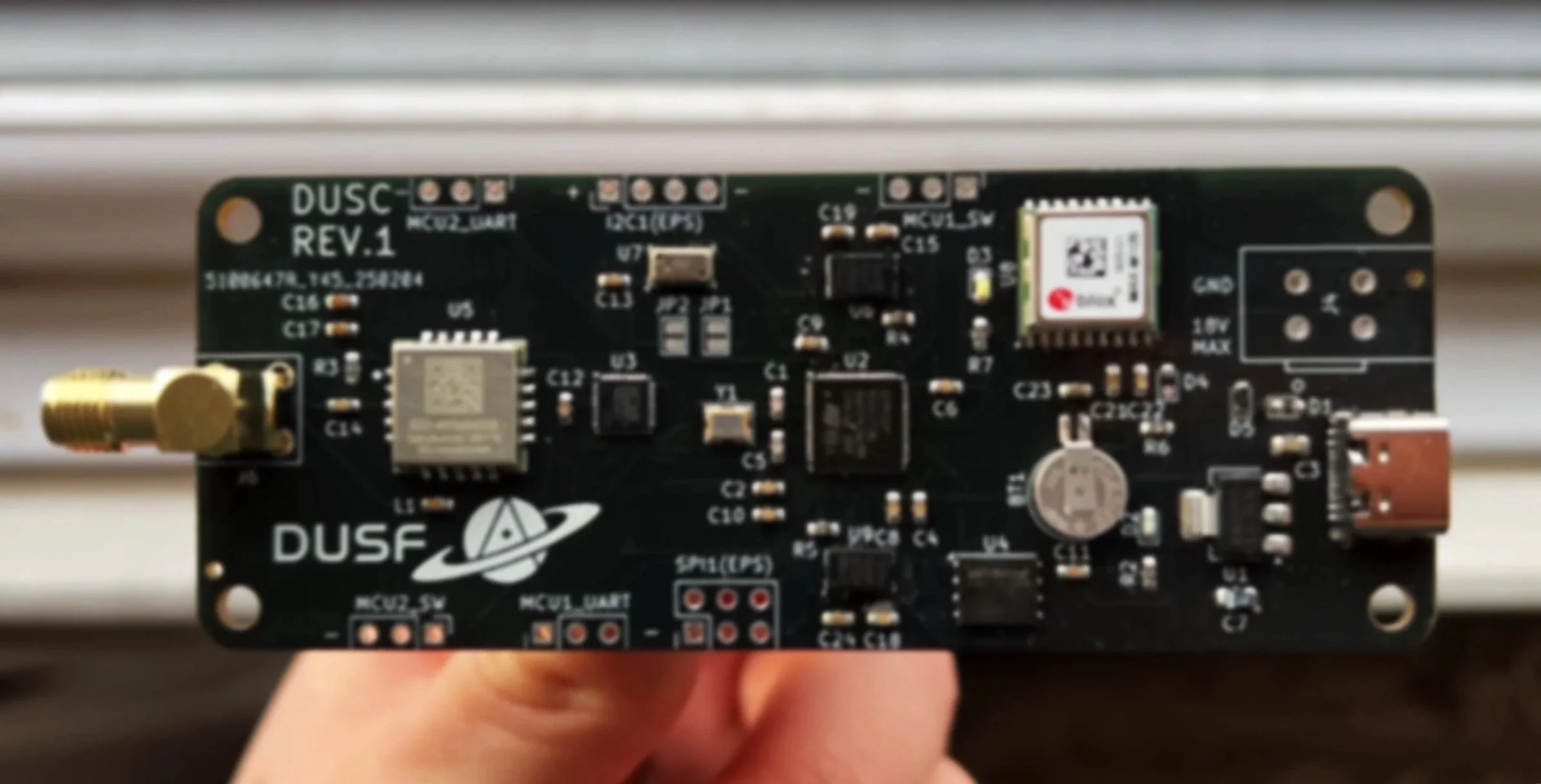
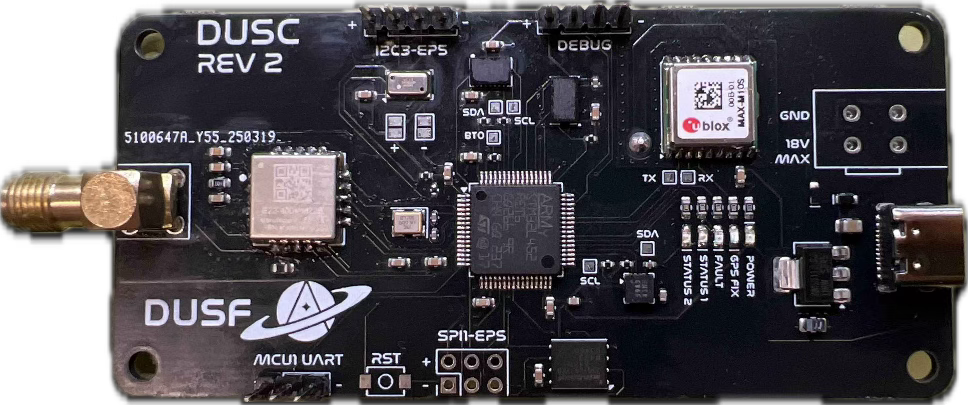
Durham University Spaceflight Computer (DUSC) is our very own state-of-the-art flight computer capable of tracking and transmitting telemetry data up to the extreme altitude of the Karman line (100km). The board features:
Ultra long-range LoRa radio,
GPS
Accelerometers
Temperature sensor
Barometer
Pyro channels
Expansion SPI port for EPS integration

Advanced Tracking Systems
EPS
Experimental Positioning System is a powerful high-dynamics GNSS receiver capable of determining altitude to an extremely high level of precision. Using an RF front-end alongside an FPGA and MCU, this board will track altitude in real-time for rockets that surpass the 30km barometer-redundancy limit, opening up the opportunity for accurate measurement as we breach into the realms of space.
LPS
Local Positioning System (LPS) is a micro-constellation of ground stations used to measure altitude for ultra high-performance rockets. This is a sister project to EPS, both aiming to pave the way for DUSF space launches.